I never paid much attention to short stories when I was younger. As a reader, I wanted long narratives that would immerse me for hours, so there wasn’t much appeal in a genre built on brevity. In creative writing courses, I always used short story prompts to bolster my sprawling ideas for novels; they weren’t unique, standalone narratives — they were bricks in the foundation of something larger, something that would be much more important. I didn’t understand that short writing exercises could help me hone my craft and become a more thoughtful reader.
Then, in 2018, I decided to try a NYC Midnight writing challenge. It was the start of my love affair with short fiction. I’ve continued participating in these writing challenges because I want to push myself to be a better storyteller. I think the contest’s parameters helped me understand the inherent intentionality of short stories better than any classroom assignment could. When you only have 1,500-7,500 words to establish a compelling world, high stakes, and a satisfying resolution, you have to take a good, hard look at which ideas matter the most. Your voice gets distilled into its most poignant essence because you have limited time and space to convince the reader to buy into what you have to say. From my perspective, short stories seem to have the highest highs and the lowest lows in literature. Since there are generally no follow-ups, spin-offs, or sequels to short stories, the mind can run wild imagining the implications of what could happen after the last period on the page.
I’ve compiled a list of five short stories that stand out as mile-markers on my journey of short story appreciation. These tales linger with me for various reasons, and I’ve tried to detail their specific strengths without spoiling them for new readers. Comment below to tell me your thoughts on these suggestions (or recommend some other short stories I should check out!).
“All the Time We’ve Left to Spend,” by Alyssa Wong (from Robots vs. Fairies, 2018)
SCIENCE FICTION
“Westworld” meets K/DA. Wong’s masterful use of emotion keeps bringing me back to this piece. The protagonist’s inner monologue is riddled with grief and guilt that feels raw and genuine; as her companion in this hotel, you sense the deep loneliness that drives her to return to these rooms again and again. The story also raises some interesting ideas about the identity and autonomy of celebrities, as well as the ethics of preserving their legacies through artificial intelligence. (I’d be lying if I said this concept didn’t inspire my own foray into short science fiction, “Is There Life on Mars?”)
This is only one of two stories I genuinely loved in the Robots vs. Fairies anthology, but it was enough to justify keeping the book in my library for future rereads. (You’ll read about my other favorite below.)
You can read “All the Time We’ve Left to Spend” here!
“Bread and Milk and Salt,” by Sarah Gailey (from Robots vs. Fairies, 2018)
FANTASY
The other good story in Robots vs. Fairies. The visceral imagery of this piece instantly embedded the story in my brain. There’s body horror, but the purple prose cushioning those parts makes them slightly more palatable for me (without softening the narrative impact of those parts). No one is a hero here, and that’s what makes the cat-and-mouse relationship between the main characters so enticing. If you enjoyed the dark fae elements in works like Susanna Clarke’s Jonathan Strange & Mr. Norrell or (to some extent) Jim Henson’s “Labyrinth,” I think you’ll get the same spine-tingling thrills from Gailey’s work.
You can follow this link to read the story for yourself!
“The Lottery,” by Shirley Jackson (1948)
DYSTOPIAN FICTION
Ah yes, every English teacher’s favorite shock piece! Obviously, the twist at the end makes this story extremely memorable, but that ending wouldn’t have nearly the same punch without the build-up. The individual residents of the village are so uniquely characterized that even a handful of lines make each person memorable. The dialogue is natural and believable — the characters interact like real friends and neighbors. By the middle of the story, you’re lulled into a false sense of hope and security; by the end, you’re ashamed you allowed yourself to be so easily duped. The suspense is masterfully crafted, which is why it’s so popular. This story is what made me a Shirley Jackson fan.
On a side note, does anyone else remember M. Night Shyamalan’s “The Village?” Give me that cast, crew, and production for an adaptation of “The Lottery,” please.
If you have somehow avoided this story up until now, you can read it here!
“The Veldt,” by Ray Bradbury (from The Illustrated Man, 1951)
SCIENCE FICTION
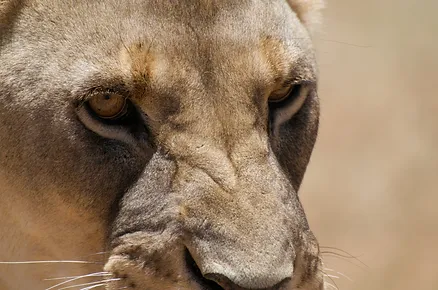
More exceptional imagery here (I’m a sucker for good descriptions), more great suspense built up through strategically placed hints, and another startling finale you can’t forget. I find that this story appeals to me for the same reason I like Lemony Snicket’s A Series of Unfortunate Events: the conflict arises because adults are not acting in the best interests of their children. “The Veldt” is a parable against spoiling children, for sure, but it is also a warning to adults about the dangers of disengaging from their children’s emotional needs. The resolution to that conflict may be a little extreme here, but that hyperbole is what makes the story exceptional. Once you’ve encountered those lions, there’s no going back.
You can read the story here (some typos due to translation).
“The Yellow Wallpaper,” by Charlotte Perkins Gilman (1892)
GOTHIC FICTION
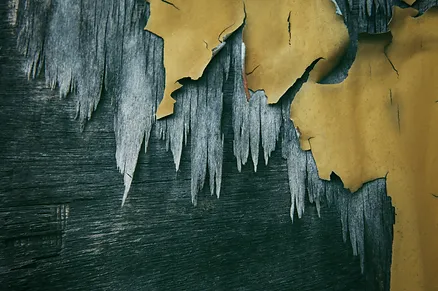
Last but not least, another staple of your English class curriculum! As I was reflecting on my interactions with this story, I realized that “The Yellow Wallpaper” means something very different to me as an adult than as a student. I now know many women who have experienced prejudice when interacting with medical professionals; I’m also more aware of the serious risk that post-partum depression poses to new parents and their relationships with their partners and infants. There is another layer to “The Yellow Wallpaper” that can only be uncovered through a deeper understanding of mental health and the history of harmful, traumatic “treatments” used to address these conditions. This is not a cheerful story, but it’s an exceptional demonstration of the craft and deserves to live rent-free in your brain.
Follow this link to read this classic short story.